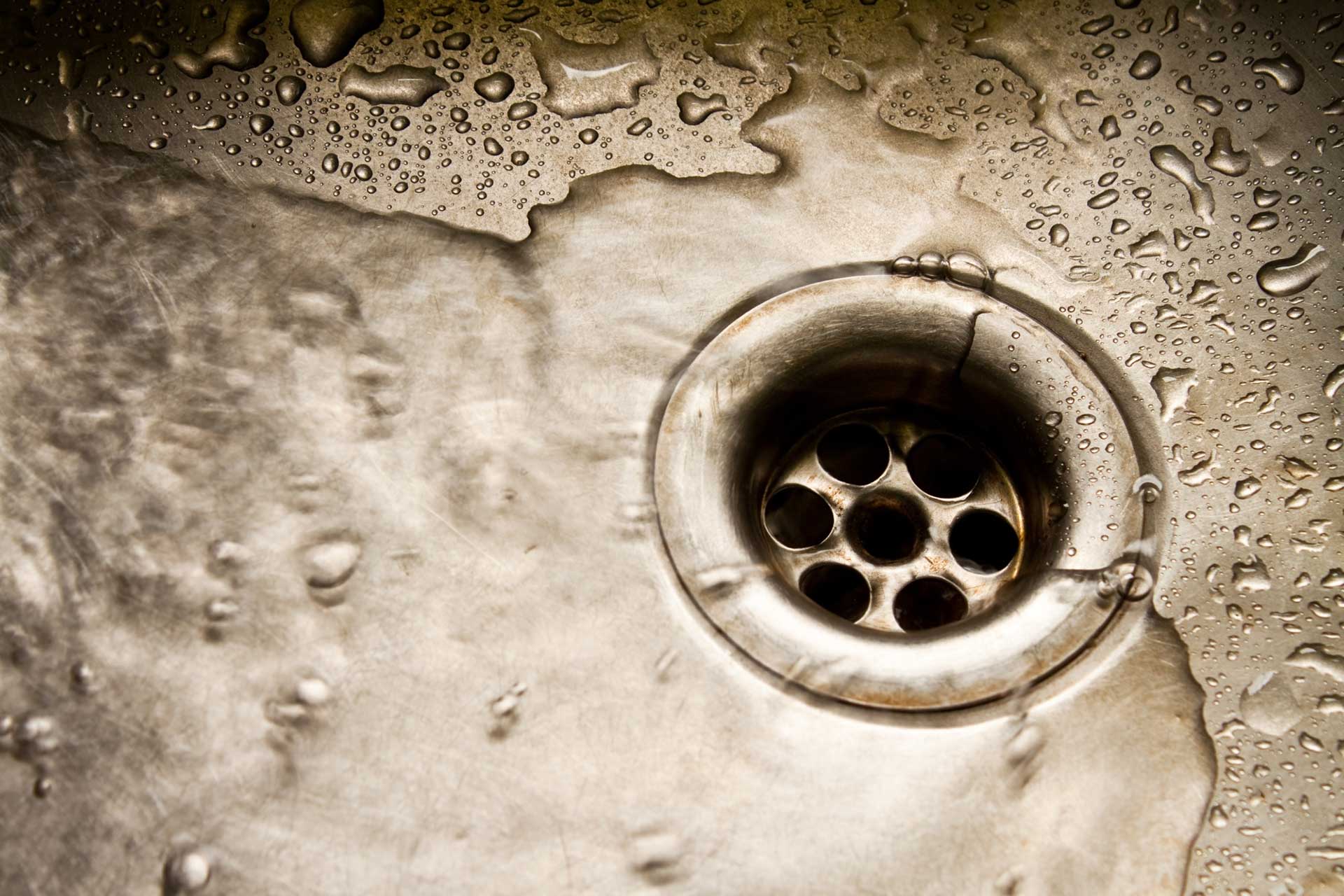
If the same drain clogs over and over, the clog isn’t the problem. It’s the symptom. A drain that keeps backing up almost always has an underlying cause: grease coating the inside of the pipe, tree roots working into a joint, a sagging section of line that collects debris, or a partial blockage farther down that never fully cleared. Plunging or snaking opens the drain for a while, but until the cause is found and fixed, the clog has a return ticket.
Here’s what’s usually behind a drain that won’t stay clear, why the bottle of chemical cleaner is making things worse, and how to actually end the cycle.
A clog that comes back is telling you something
A one-time clog is ordinary life. Someone rinsed a pan they shouldn’t have, a kid flushed something ambitious, and once it’s cleared, that’s the end of it.
A repeating clog is different. Pipes don’t clog in the same spot every few months by coincidence. Something about that section of line is catching debris, and every clearing just resets the clock. The useful question isn’t “how do I open this drain again,” it’s “what is this drain trying to tell me?” The answer is usually one of a handful of things.
The usual causes of a drain that keeps clogging
Grease and soap coating the pipe walls. This is the classic kitchen sink story. Grease doesn’t need to be poured in by the cup to cause trouble. A little from every pan, mixed with soap and food particles, builds a coating on the pipe wall that narrows the opening year after year. Eventually the drain slows, someone snakes it, and the cable punches a hole through the buildup without removing it. The hole closes back up, and the cycle repeats.
Hair and soap scum. Bathroom sinks and tubs collect hair that binds with soap residue into a mat just below the drain. Easy to clear, quick to rebuild, especially in a busy household.
Tree roots in the line. Roots find their way into small gaps at pipe joints, especially in the older clay sewer lines common around the St. Louis area, and they don’t stop growing once they’re in. A line with root intrusion will clog on a schedule, often worse in growing season, and cutting the roots out only buys time until they grow back.
A sagging or “bellied” pipe. Soil settles, and a section of buried line can sink into a low spot. Water still flows through, but solids and debris settle in the belly and slowly build a blockage. No amount of careful drain habits fixes a pipe that’s shaped like a hammock.
A partial blockage that never fully cleared. Sometimes the original clog was only pushed, not removed. The leftover mass sits farther down the line catching everything that comes after it, which is why a drain can start slowing again within weeks of being “fixed.”
Gurgling and slow drains everywhere. If it’s not one drain but several, and you hear gurgling or notice water backing up in one fixture when another runs, the problem has moved past a single pipe. That points to the main line, which is a different conversation and a more urgent one.
Why chemical drain cleaners make recurring clogs worse
We understand the appeal. The bottle is cheap and the hardware store is close. But for a drain that keeps clogging, caustic cleaners are close to the worst option.
They rarely remove the whole blockage. The chemical eats a channel through the soft center of the clog, water flows again, and the coating on the pipe walls stays right where it was. Meanwhile, repeated use is genuinely hard on pipes, particularly older metal lines, and the chemicals that don’t clear the clog sit in the pipe. That’s a hazard for whoever eventually opens that drain.
If a drain has needed the bottle more than once, it’s past what the bottle can do.
Why snaking sometimes only fixes it for a while
Snaking is a good tool, and for most everyday clogs it’s the right one. But a cable clears a path. It doesn’t scrub the pipe. In a line coated with years of grease, or one with roots or a belly, snaking restores flow without touching the condition that caused the clog.
That’s where two things earn their keep. A camera inspection looks inside the line and shows exactly what’s going on, so you stop guessing. And hydro jetting scours the full inside of the pipe wall with high-pressure water, removing the buildup instead of tunneling through it. When a customer tells us “this drain gets snaked every year,” that combination is usually what ends the pattern. It’s the difference between opening a drain and actually cleaning it, and it’s the heart of our drain cleaning service near St. Charles.
When it’s not the drain, it’s the main line
One drain clogging repeatedly is a pipe problem. Multiple drains acting up together is a main line problem, and heavy Missouri summer storms have a way of revealing it, when floor drains back up or the basement drain burps after a laundry cycle. Toilets gurgling, water appearing in the tub when you flush, sewage smell from the lowest drains in the house: those are main line warnings, and they deserve a fast response, because the next stage is sewage backing up into the basement. If that sounds like your house, skip the DIY round and have the line inspected.
How to keep drains from clogging in the first place
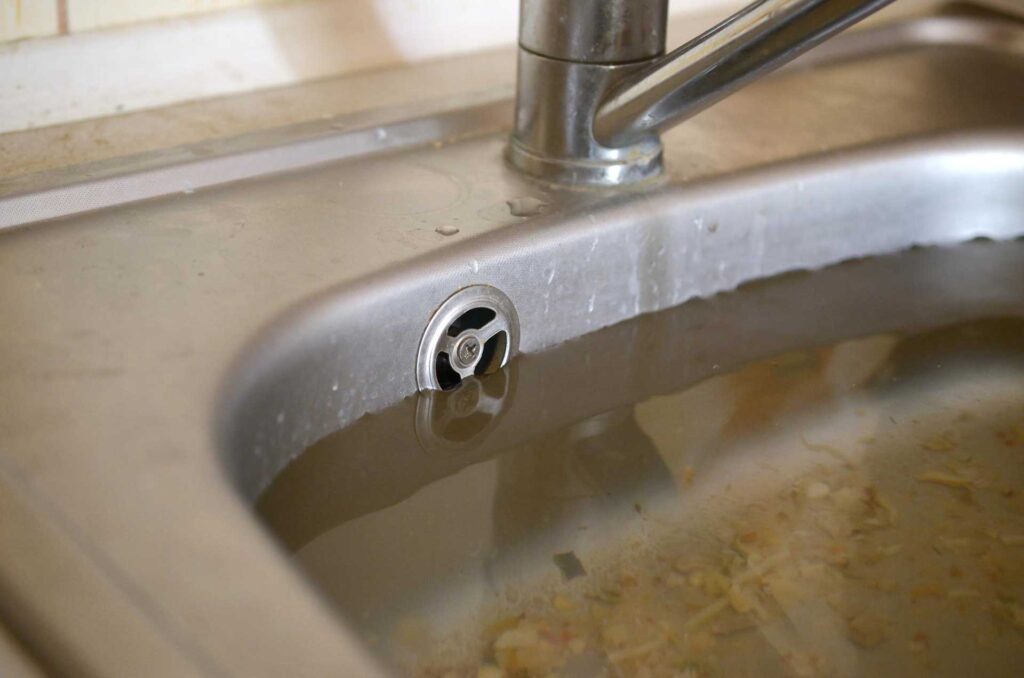
Good habits won’t fix a bellied pipe or evict tree roots, but they prevent the everyday buildup that causes most single-fixture clogs:
- Keep grease out of the kitchen sink. Wipe pans with a paper towel and scrape grease into the trash. This one habit prevents more kitchen clogs than everything else combined.
- Use strainers or hair catchers in tubs, showers, and bathroom sinks, and empty them regularly.
- Ignore the word “flushable.” Wipes, even the flushable kind, don’t break down like toilet paper and are a top cause of line blockages.
- Run plenty of cold water with the garbage disposal, and don’t treat the disposal like a second trash can. Fibrous scraps, coffee grounds, and starchy peels belong in the bin.
- Skip the caustic cleaners. If you want a maintenance product, enzyme-based treatments are far gentler on pipes, though they’re a supplement to good habits, not a cure for an underlying problem.
When to call a plumber
Call when a drain has clogged more than once in the same spot, when snaking or chemicals only helped temporarily, when more than one drain is acting up at the same time, or when there’s any sewage smell or backup at the lowest drains in the house. A recurring clog investigated once and fixed properly costs less, in money and in Saturday mornings, than clearing the same drain every season.
Authority Plumbing & Drain diagnoses and fixes recurring clogs for homes and businesses across St. Charles County and the surrounding area, with camera inspection to find the real cause and honest advice about whether you need a simple clearing, a jetting, or a repair. Call (314) 326-1160 or request service online and we’ll help you break the cycle.
Frequently asked questions
Why does my drain keep clogging after I snake it?
Because snaking clears a path through the blockage without removing what’s coating or catching in the pipe. Grease buildup, roots, or a sagging section will rebuild the clog around the cleared path. A camera inspection identifies which one you’re dealing with, and hydro jetting or a repair addresses it at the source.
Are chemical drain cleaners bad for your pipes?
Used repeatedly, yes. Caustic cleaners are hard on pipes, especially older metal lines, and they usually open only a channel through the clog rather than clearing it. They also leave hazardous residue in the line. For a drain that clogs repeatedly, they treat the symptom while the cause keeps growing.
Why do all my drains back up at once?
Multiple drains backing up together points to a blockage in the main sewer line that serves the whole house rather than in any single fixture’s pipe. Gurgling toilets, water rising in the tub when you flush, and sewer odor from floor drains are the same warning. A main line issue is worth addressing quickly, before it becomes a sewage backup.
How do plumbers figure out why a drain keeps clogging?
With a drain camera. Instead of guessing from symptoms, we run a camera through the line and look at it directly: grease, roots, a belly, or a damaged section. You see what we see, and the fix matches what’s actually down there.
Is it normal for a drain to clog every few months?
No. An occasional clog is normal life. A drain on a clogging schedule has an underlying cause, and finding it once is cheaper than clearing the same clog four times a year.