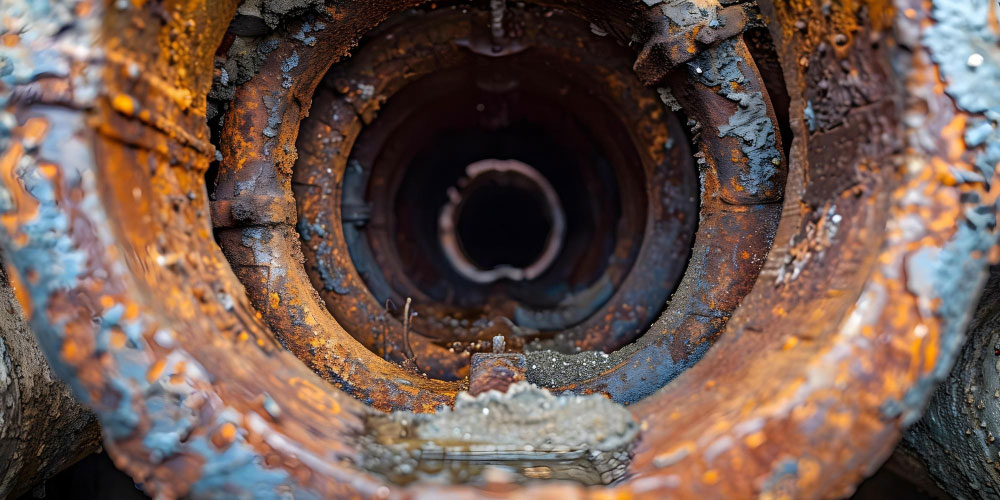
A blocked drain and a broken sewer line can start out looking identical. Water backs up, something smells, and you want it to stop. But the two problems need completely different fixes, and the difference costs real money if you guess wrong. The short version: if clearing the line solves it and it stays solved, you had a clog. If the same line backs up again weeks or months later, the pipe itself is probably damaged, and cleaning it will keep working temporarily and failing permanently.
Here’s how to read the symptoms, why cleaning a damaged line is such a convincing trap, and what actually settles the question.
The quickest way to tell: watch the pattern, not the symptom
A single backed-up drain tells you almost nothing on its own. Both problems produce it. What separates them is the pattern over time and how much of the house is involved.
It’s probably a clog if:
- One fixture is affected and the rest of the house drains normally
- It happened after something identifiable, like a big cooking day, a guest weekend, or something going down that shouldn’t have
- Clearing it fixed the problem and it stayed fixed
- There’s no odor outside and nothing odd going on in the yard
It’s probably sewer line damage if:
- The same line backs up on a repeating schedule
- More than one fixture acts up at the same time, especially the lowest drains in the house
- Flushing a toilet makes water rise in a tub or shower
- You smell sewage indoors or somewhere in the yard
- There’s a wet patch, a strip of unusually green grass, or a dip in the lawn that doesn’t dry out
- The house is older and still on its original clay or cast iron line
The second list is describing a pipe that has lost its integrity: roots inside it, a section that has sagged into a low spot, a separated joint, or a crack. Debris catches there every time, which is why clearing it only ever buys you months.
Why cleaning a damaged line fools almost everyone
This is the part worth understanding, because it’s how homeowners end up paying to clear the same line year after year.
When a plumber snakes a damaged sewer line, it works. Water flows again, the backup stops, and the visit looks like a success. But the cable pushed through whatever had collected at the bad spot without changing the bad spot itself. The roots are still in the joint. The belly is still holding water. The crack is still catching solids. The line starts filling back in the day it’s cleared.
So the feedback you get is misleading. Each cleaning genuinely works, which makes the next cleaning feel like the reasonable next step rather than a sign you’re treating the wrong problem. If you’ve had the same line cleared more than twice, the cleanings aren’t the solution. They’re the symptom of a line that needs repair. We dug into that dynamic at the fixture level in our guide to recurring drain clogs, and the same logic applies, just at a larger and more expensive scale, when it’s the main line.
What a camera inspection actually settles
You cannot diagnose a sewer line from the symptoms alone, and neither can anyone else. Someone who tells you what’s wrong with a buried pipe without looking at it is guessing, however confidently.
A camera run down the line ends the guessing in a few minutes. It shows whether the pipe is intact or compromised, exactly where the problem sits, how far down it is, and whether it’s roots, a break, a separated joint, or a section that has settled. That single piece of information decides everything that follows: whether you need a cleaning, a targeted repair on one section, or a full replacement.
It also protects you as a customer. When you can see the footage yourself, a repair recommendation stops being something you have to take on trust. If the line looks sound, you’ll know a cleaning is genuinely all you need.
What each fix involves
If it’s a clog. Cabling or snaking clears most everyday blockages. For lines coated with years of grease or scale, hydro jetting scours the pipe wall instead of just punching through the middle, which is what stops fast-returning clogs in otherwise healthy pipes. That’s the work covered by our drain cleaning service.
If it’s damage. The repair depends on how much of the line is affected. A single cracked section, a separated joint, or one root-damaged length can often be fixed in place without touching the rest of the run. A line that’s failing in several spots, is badly bellied, or has simply reached the end of its material life needs replacement, because repairing one section of a pipe that’s deteriorating along its whole length just schedules the next failure. That’s the sewer line repair side of things.
The honest answer is that a good plumber should be willing to tell you it’s only a cleaning when that’s true. That’s easier to trust when the recommendation comes with footage attached.
Why older St. Charles and St. Louis area homes see this more
Plenty of homes in the area were built with clay or cast iron sewer lines, and both have a finite lifespan. Clay is brittle, and its joints separate as the ground moves around them, which gives roots an opening. Cast iron corrodes from the inside until the wall thins out. Add mature trees, Missouri’s freeze and thaw cycles, and decades of settling soil, and you get a lot of original lines that are at or past the end of their service life.
That’s not a reason to panic if your house is older. It is a good reason to have the line looked at rather than assuming that a second or third backup is just bad luck.
When to stop cleaning and start investigating
Call for an inspection rather than another clearing when:
- The same line has been cleared more than twice
- Multiple drains back up at the same time
- There’s sewage odor inside the house or out in the yard
- The lawn has a soggy, sunken, or unusually green area along the line’s path
- You’re buying an older home and want to know what you’re inheriting before closing
- A backup reaches the point of sewage entering the house, which should be treated as urgent
Authority Plumbing & Drain handles both sides of this across St. Charles County and the surrounding area. We camera the line first, tell you plainly whether you’re looking at a cleaning or a repair, and do the work either way. Call (314) 326-1160 or request service online.
Frequently asked questions
How do I know if my sewer line is broken or just clogged?
Look at the pattern rather than the single incident. A one-time backup that stays clear after cleaning was a clog. A line that backs up repeatedly, multiple drains failing together, sewage odor, or wet patches in the yard point to a damaged pipe. A camera inspection confirms it definitively.
Can a plumber tell without a camera?
Not reliably. The symptoms of a blockage and the symptoms of a damaged line overlap heavily, and the pipe is buried. An experienced plumber can form a strong suspicion from the pattern, but confirming it, and knowing exactly where and how bad, requires looking inside the line.
Is drain cleaning a waste of money if the line is damaged?
Not entirely, because it restores flow and buys you time, which matters if you need the house usable today. It’s a waste as a long-term strategy, though. Repeated cleanings on a damaged line cost more over a few years than diagnosing it once and fixing the actual problem.
Will roots come back after they’re cut out?
Yes, unless the opening they’re entering through is repaired. Cutting roots clears the line for a season or two, but the gap that let them in is still there, and roots grow back toward the same water source. Ending the cycle means repairing the pipe.
Should I get a sewer inspection before buying an older home?
It’s worth serious consideration, especially for homes still on original clay or cast iron lines. A sewer line problem is one of the few home issues that can be invisible during a standard inspection and expensive shortly after you move in.