What to Do Right Now, and How to Keep Them From Bursting
If you just turned on a faucet and nothing came out, or you can hear water running somewhere it shouldn’t be, here’s the short version: shut off your main water valve, open the affected faucet, and start warming the frozen section gently. Never use an open flame. If water is already leaking, keep the main valve off and call a plumber, because the pipe has likely burst.
That’s the emergency answer. The rest of this guide walks through how to tell whether a pipe is frozen or already burst, how to thaw it safely, when to stop and call for help, and how St. Charles homeowners can keep it from happening in the first place.
Frozen or burst? How to tell the difference
A frozen pipe and a burst pipe start the same way but end very differently, so figure out which one you’re dealing with first.
Signs a pipe is frozen but intact:
- A faucet produces a trickle or nothing at all, usually after a hard cold snap
- Only some fixtures are affected, often ones on exterior walls or above a crawlspace
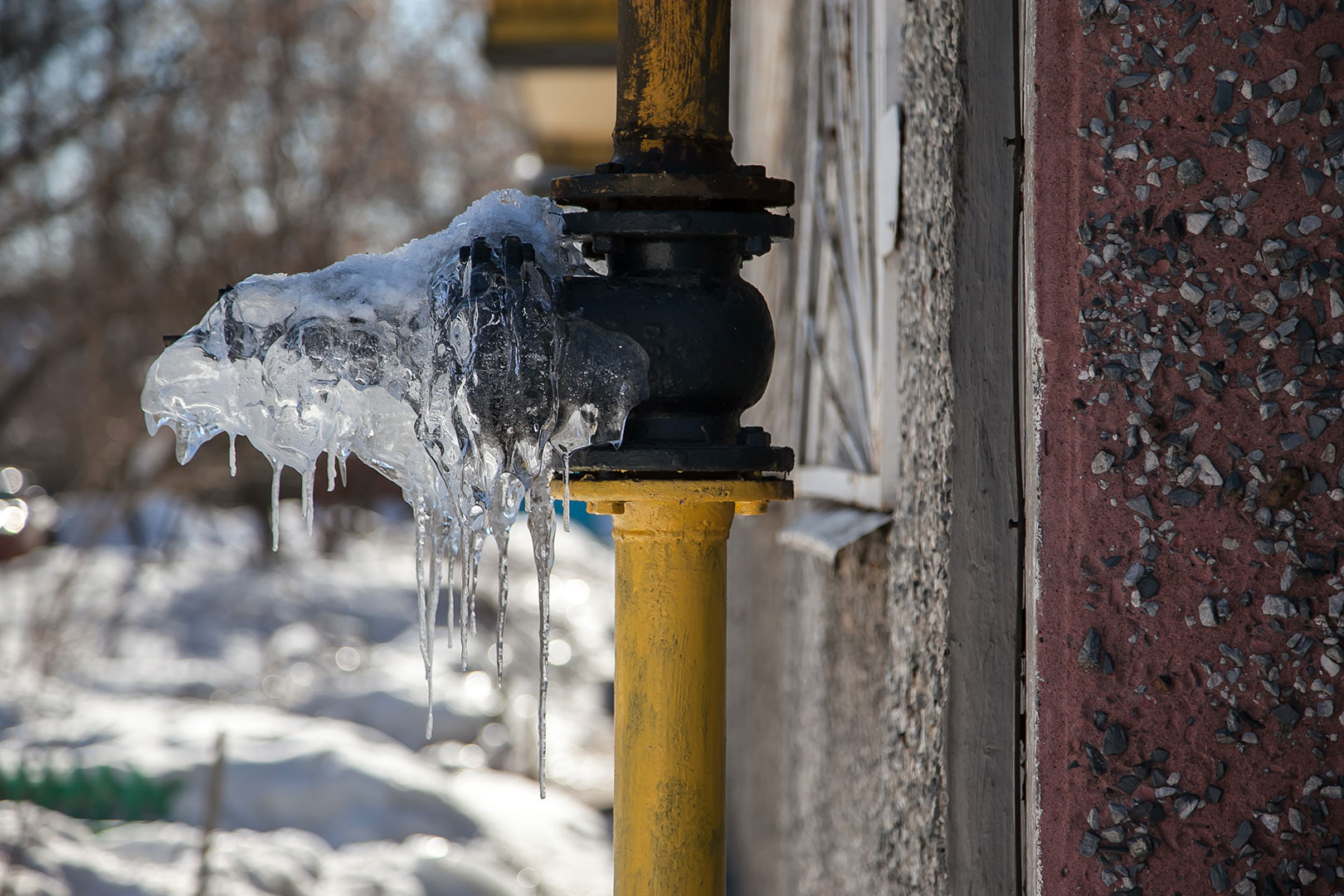
- You can see frost on an exposed pipe, or a section feels much colder than the rest
- No water is showing up anywhere it shouldn’t
Signs the pipe has already burst:
- Water stains, bubbling paint, or a sagging spot on a ceiling or wall
- The sound of running water when everything is off
- A sudden drop in water pressure through the house
- Water pooling in the basement, under a sink, or along a wall
- Your water meter keeps moving with all fixtures off
Here’s the tricky part: a burst pipe often doesn’t leak right away. While the water inside is frozen, the ice plugs its own crack. The flood starts when things thaw. That’s why the hours during and right after a thaw are when you need to pay the most attention, and why “it’s frozen but nothing’s leaking” doesn’t mean you’re in the clear yet.
What to do the moment you find a frozen pipe
- Find your main shutoff valve before you do anything else. In most St. Charles homes it’s in the basement near where the water line enters, often close to the water meter. If the pipe turns out to be cracked, you’ll want to kill the water in seconds, not minutes. If you can’t find your shutoff, that alone is a good reason to call a plumber.
- Open the affected faucet. Open the cold and hot handles on the fixture the frozen pipe feeds. This relieves pressure in the line and gives melting water somewhere to go, which lowers the chance of a burst while things thaw.
- Warm the frozen section gently. A hair dryer, a heat lamp, a space heater in the room, or towels soaked in hot water all work. Start from the faucet end and work back toward the frozen area. Slow and steady is the goal.
- Never use a torch, open flame, or anything with a naked heat source. Every winter, house fires start this way. Flame can also boil water inside the pipe and burst it, which trades one emergency for two.
- Keep an eye on it as it thaws. Full flow returning with no leaks is the good outcome. Any dripping, spraying, or wet building materials means the pipe cracked. Shut the main valve and move to the next section.
If the pipe has burst
A burst pipe is about speed. A cracked supply line can release a surprising amount of water in minutes, and drywall, flooring, and anything stored nearby will soak it up fast.
- Shut off the main water valve immediately. This is the single most important step.
- Open faucets to drain the lines. Once the main is off, opening faucets lets the remaining water drain out through fixtures instead of the crack.
- Kill electricity to affected areas if water is anywhere near outlets, cords, or your panel. Don’t stand in water to do it. If you’re not sure it’s safe, leave it and tell the plumber when you call.
- Move what you can and start drying. Towels, a wet vac, fans. The faster things dry, the less damage and the lower the odds of mold.
- Call a plumber. A burst pipe is not a patch-and-hope repair. The cracked section needs to be properly replaced, and it’s worth having the surrounding runs checked, because a freeze hard enough to burst one pipe often stresses others.
If you’re dealing with this right now in the St. Charles area, call Authority Plumbing & Drain at (314) 326-1160 and we’ll get a licensed plumber moving your way.
Why pipes freeze in St. Charles homes
Missouri winters swing hard. A week of mild weather followed by a single-digit night is exactly the pattern that catches homes off guard, because nobody has winterized yet and then the temperature falls off a cliff. The usual trouble spots:
- Pipes on exterior walls, especially kitchen and bathroom supply lines with cabinets that block room heat
- Crawlspaces, garages, and unfinished basements, where lines run through unheated air
- Outdoor faucets with hoses still attached, which trap water right where it’s coldest. This one causes damage you often don’t discover until spring, and we covered it in detail in our guide to why outdoor faucets leak
- Homes that sit empty, even for a long weekend, with the thermostat set too low
Wind matters as much as temperature. A pipe in an exterior wall can freeze on a 20-degree night with strong wind pushing cold air into the wall cavity, even though the same pipe rode out colder, calmer nights just fine.
How to keep pipes from freezing
Most frozen pipe emergencies are preventable, and none of the prevention steps are expensive.
- When a hard freeze is coming, let vulnerable faucets drip. Moving water is much harder to freeze, and a slow cold-water drip overnight is cheap insurance for fixtures on exterior walls.
- Open cabinet doors under sinks on exterior walls so room heat reaches the pipes.
- Keep the thermostat at a consistent temperature day and night during cold snaps, and never below 55 degrees when you’re away.
- Insulate exposed runs in crawlspaces, garages, and basements with foam pipe sleeves. It’s a cheap weekend job.
- Disconnect hoses and drain outdoor faucets in the fall, and consider frost-free hose bibs if your home still has older standard spigots.
- Seal air leaks near pipes, like gaps where lines pass through exterior walls or rim joists. A small draft aimed at a pipe all night does real work.
When to call a plumber
Handle the gentle-thaw routine yourself if the frozen section is accessible and nothing is leaking. Call a pro when:
- You can’t find where the pipe is frozen, or it’s inside a wall or ceiling
- Water is leaking anywhere, or you see stains and damp materials
- The pipe has frozen more than once in the same spot, which means the underlying exposure problem needs fixing, not just another thaw
- The whole house is without water, which can mean the main line or meter connection froze
- You’re just not comfortable doing it, which is a perfectly good reason
Repeat freezing is worth stressing. Thawing a pipe gets your water back today, but if the same run freezes every cold snap, the real fix is rerouting, insulating, or protecting that line so you’re not gambling on it every January. That’s the kind of permanent fix our St. Charles plumbers handle all winter.
Frozen and burst pipe repair in St. Charles
Authority Plumbing & Drain repairs frozen and burst pipes for homeowners across St. Charles County and the surrounding area, from thawing and repairing a single cracked line to replacing runs that have frozen one winter too many. We’re licensed, bonded, and insured, with a 4.9-star rating from local customers, and we’ll tell you straight whether you need a simple repair or a smarter long-term fix.
Call (314) 326-1160 or request service online, and we’ll get your water flowing again.
Frequently asked questions
How do I unfreeze pipes fast?
Open the affected faucet, then warm the frozen section with a hair dryer, heat lamp, or space heater, working from the faucet back toward the blockage. Keep the heat gentle and moving. Never use a torch or open flame. If you can’t reach the frozen section or can’t find it, call a plumber rather than waiting it out.
Will frozen pipes thaw on their own?
Usually, once temperatures rise. The problem is what happens during the thaw. If the ice cracked the pipe, the leak starts as it melts, and waiting means the burst happens on the pipe’s schedule instead of while you’re watching. It’s safer to thaw deliberately with the main shutoff located and the faucet open.
At what temperature do pipes freeze?
Exposed or poorly insulated pipes are at risk once outdoor temperatures drop to around 20 degrees Fahrenheit, and sustained single-digit cold puts even semi-protected lines in danger. Wind makes it worse by driving cold air into wall cavities and crawlspaces.
How do I know if a frozen pipe has burst?
Watch for water where it shouldn’t be: stains or bubbling on walls and ceilings, pooling water, the sound of running water with everything off, or a water meter that moves when no fixtures are on. A burst often reveals itself only after thawing, so check these again once your water is flowing.
Should I turn off my water if a pipe freezes?
Know exactly where your main shutoff is before you start thawing, and shut it off at the first sign of any leak. If the frozen pipe is in a wall or you can’t monitor it while it thaws, shutting the main off ahead of time is the cautious play.
My pipes freeze in the same spot every winter. What’s the fix?
A pipe that freezes repeatedly has an exposure problem: too close to cold air, too far from heat, or missing insulation. The permanent fix is protecting or rerouting that line, which is a normal job for a plumber and much cheaper than one burst.