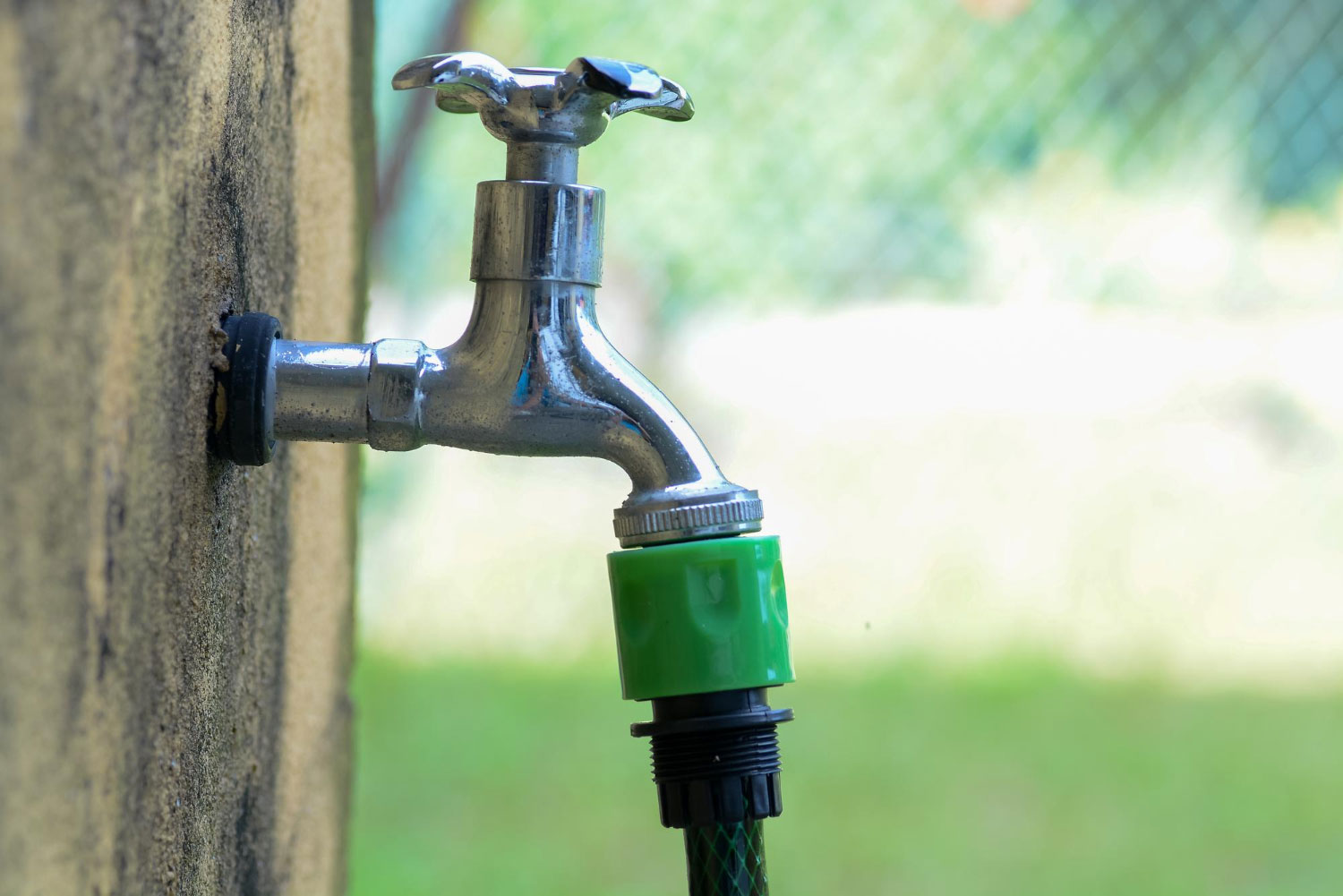
The first warm weekend of the year, you hook up the hose, turn the handle, and there it is: water dripping from the spout, seeping around the handle, or worse, running down the side of the house. An outdoor faucet usually leaks for one of a few reasons: a worn washer or packing inside the valve, a loose connection, or a pipe that cracked over the winter and only leaks once you open the valve. The trick is figuring out which one you’ve got, because some are a five-minute fix and one of them can quietly soak the inside of your wall.
Here’s how to tell what’s going on with your hose bib, what you can handle yourself, and when it’s worth calling a plumber.
First, figure out where the water is coming from
Where the leak shows up tells you a lot about the cause. Take a look before you do anything else.
- Dripping from the spout while the faucet is off. The valve isn’t sealing all the way. This is almost always a worn washer or seat inside the faucet, the same idea as a dripping kitchen tap.
- Leaking around the handle when the water is on. The packing or the stem seal is worn. Water is escaping past the part that’s supposed to hold back pressure when the valve is open.
- Water at the wall, or a leak you only notice when the faucet is running. This is the one to take seriously. If water appears behind or below the faucet only when it’s turned on, the pipe inside the wall may have split, usually from freezing. The faucet itself can look perfectly fine while water pours into the wall cavity every time you use it.
That last one is why a leaking outdoor faucet is worth a closer look instead of a shrug. A drip at the spout is annoying. A crack behind the wall can rot framing and feed mold before you ever see a stain.
The most common causes of a leaking hose bib
A worn washer or O-ring. Rubber washers harden and wear out. When the one inside your faucet goes, the valve can’t seal and you get a steady drip from the spout. Common, and usually minor.
Worn packing or a bad stem. The packing nut just behind the handle keeps water from escaping around the stem when the valve is open. As it ages, you start seeing water weep from the handle every time the faucet runs.
Freeze damage from winter. This is the big one in Missouri. When water sits in an outdoor faucet or the pipe feeding it and temperatures drop, it expands as it freezes and can split the pipe. The crack often sits inside the wall where you can’t see it. Everything looks normal until spring, when you turn the faucet on and water runs into the wall instead of out the spout.
Loose or corroded connections. Years of weather, a hose that gets yanked around, and ordinary corrosion can loosen the fittings where the faucet meets the supply line. Sometimes the fix is as simple as tightening or resealing a connection.
An old standard (non-frost-free) faucet. Older homes often have basic hose bibs that hold water right at the outdoor end, which makes them far more likely to freeze and crack. If yours is original to an older St. Charles home, it may be living on borrowed time.
Why winter is usually the real culprit
Most outdoor faucet leaks that show up in spring trace back to the previous winter. If a hose was left attached in the fall, water gets trapped at the faucet with nowhere to drain. One hard freeze later, the trapped water expands and splits either the faucet body or the pipe just inside the wall. The damage is already done in January. You just don’t find out until you open the valve in April or May and water goes somewhere it shouldn’t.
That’s also why the location of the leak matters so much. A faucet that drips from the spout is a worn part. A faucet that pushes water into the wall when it’s on is very likely a freeze crack, and that needs attention before it does real damage.
Can you fix a leaking outdoor faucet yourself?
Some of these are reasonable DIY jobs. If the faucet is dripping from the spout or weeping around the handle, replacing the washer or tightening and repacking the stem is within reach for a handy homeowner, as long as you shut off the water to that faucet first.
What you should not try to ride out is a leak inside the wall. If water only appears when the faucet is running, if you see dampness on the wall or ceiling near the faucet, or if the faucet won’t shut off at all, stop using it and get it looked at. Those point to a cracked pipe or a failed valve, and the cost of waiting is water damage you can’t see.
A quick safety step for any outdoor faucet leak: find the shutoff valve on the interior pipe that feeds it, usually in the basement or a crawlspace, and close it. That stops the water while you decide what to do next.
When to call a plumber
Reach out to a pro if any of these are true:
- Water shows up at the wall, or only when the faucet is on
- You see damp drywall, staining, or mold near where the faucet enters the house
- The faucet won’t turn off, or won’t stop dripping no matter what
- There’s no shutoff valve feeding the faucet, or you can’t find it
- A frost-free faucet is leaking from inside the wall (these fail differently than standard ones and usually need replacement)
If you’d rather not chase it down yourself, our team handles outdoor faucet and hose bib repair as part of our everyday work as plumbers in St. Charles. We’ll find where it’s actually leaking, fix or replace the faucet, and check that there’s no hidden damage behind it.
How to keep it from happening again
A leaking outdoor faucet is one of the easier plumbing problems to prevent. Before the first freeze each fall:
- Disconnect the hose. This is the single most important step. A connected hose traps water at the faucet and sets up the freeze.
- Shut off the interior valve and drain the line. Close the shutoff that feeds the outdoor faucet, then open the outdoor faucet to let the remaining water drain out.
- Insulate the faucet. An inexpensive foam faucet cover adds a layer of protection on exposed spigots.
- Consider upgrading to a frost-free faucet. A frost-free (also called frost-proof) hose bib shuts the water off well back inside the heated wall, so there’s no water sitting at the cold outdoor end. For homes that have lost a faucet to freezing before, it’s a worthwhile swap.
Outdoor faucet repair and replacement in St. Charles
If your hose bib is dripping, leaking at the handle, or pushing water somewhere it shouldn’t, we can sort it out. Authority Plumbing & Drain repairs and replaces outdoor faucets for homeowners across St. Charles County and the surrounding area, including upgrading older standard spigots to frost-free models so winter stops being a problem. We’re licensed, bonded, and insured, with a 4.9-star rating from local customers.
Call us at (314) 326-1160 or request service online, and we’ll get your outdoor water working the way it should.
Frequently asked questions
Why does my outdoor faucet only leak when it’s turned on?
Because the leak is downstream of the valve, often a crack in the pipe inside the wall. When the valve is closed, no water reaches the cracked section. Open the valve and water flows to the break and out. This pattern usually points to freeze damage and is worth having checked before it harms the wall.
Is a leaking outdoor faucet a big deal?
It depends where it leaks. A drip from the spout is minor and easy to fix. Water that appears at the wall or only when the faucet is running can mean a cracked pipe behind the siding, which can cause hidden water damage and should be addressed promptly.
Should I repair or replace my hose bib?
If the faucet is solid and just needs a washer or new packing, a repair makes sense. If it’s an older standard spigot that has frozen and cracked, or it’s corroded and failing, replacing it, ideally with a frost-free model, is the better long-term choice. A plumber can tell you which situation you’re in.
What is a frost-free hose bib?
A frost-free or frost-proof hose bib is built so the actual shutoff happens well inside the heated part of the house, not at the outdoor spout. That keeps water from sitting at the cold end and freezing, which makes these faucets far less likely to crack in winter.
Can a frozen pipe from winter cause a leak that shows up in spring?
Yes, and it’s one of the most common causes we see. A pipe can crack during a hard winter freeze and stay quiet until you open the faucet months later. The first warm-weather use is often when homeowners discover the damage.